
What is halotherapy?
Halotherapy is the inhalation of micronized pharmaceutical-grade salt in a controlled environment. Sessions typically last 30 to 45 minutes in a salt room or salt booth. The STA exists to help the public understand it accurately, and to help operators deliver it responsibly.
A halogenerator grinds pharmaceutical-grade salt into particles small enough to be inhaled.
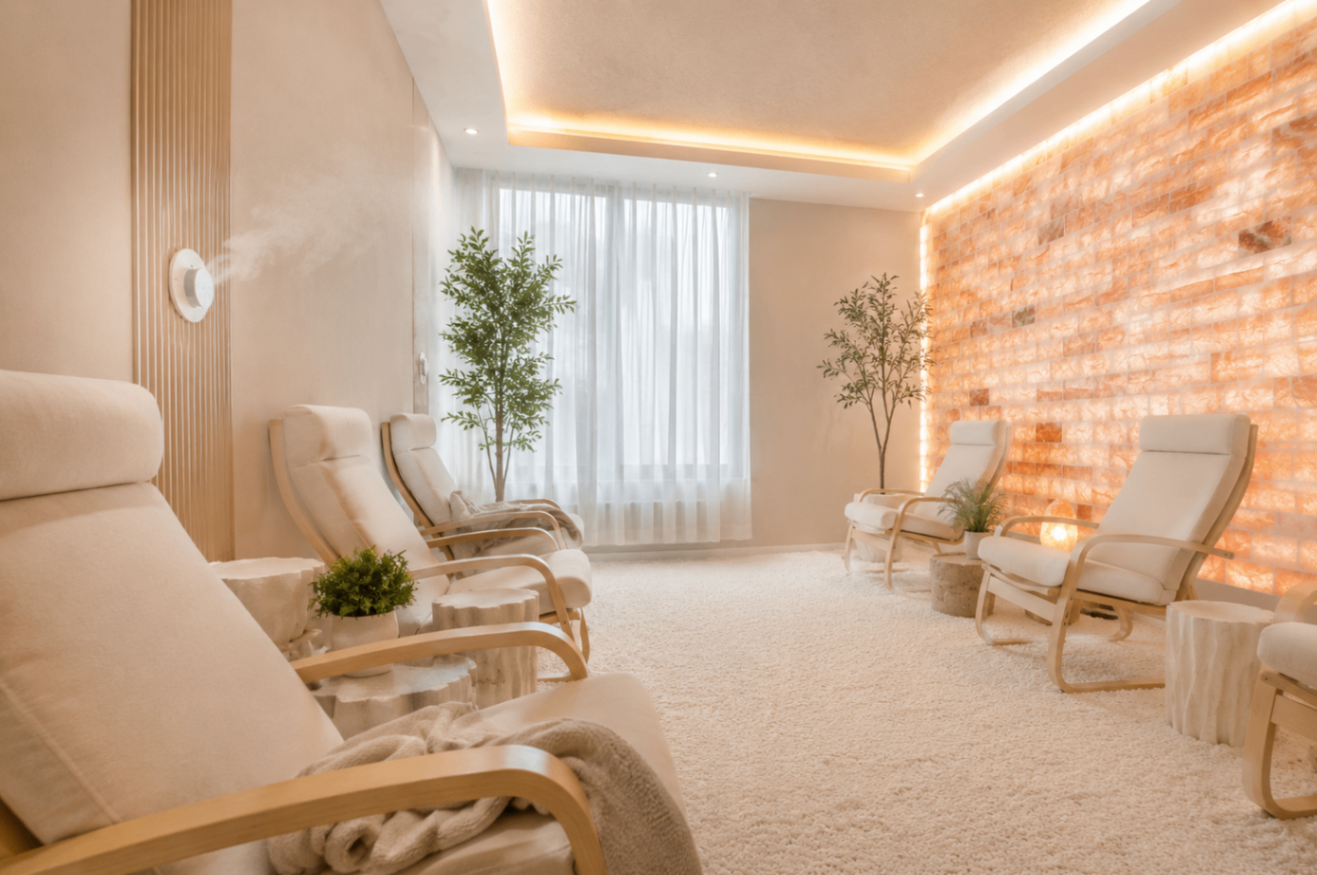
The halogenerator is the device that distinguishes a halotherapy session from sitting in a room with salt walls. It produces a controlled aerosol of dry sodium chloride microparticles, typically 1 to 5 micrometers in diameter.
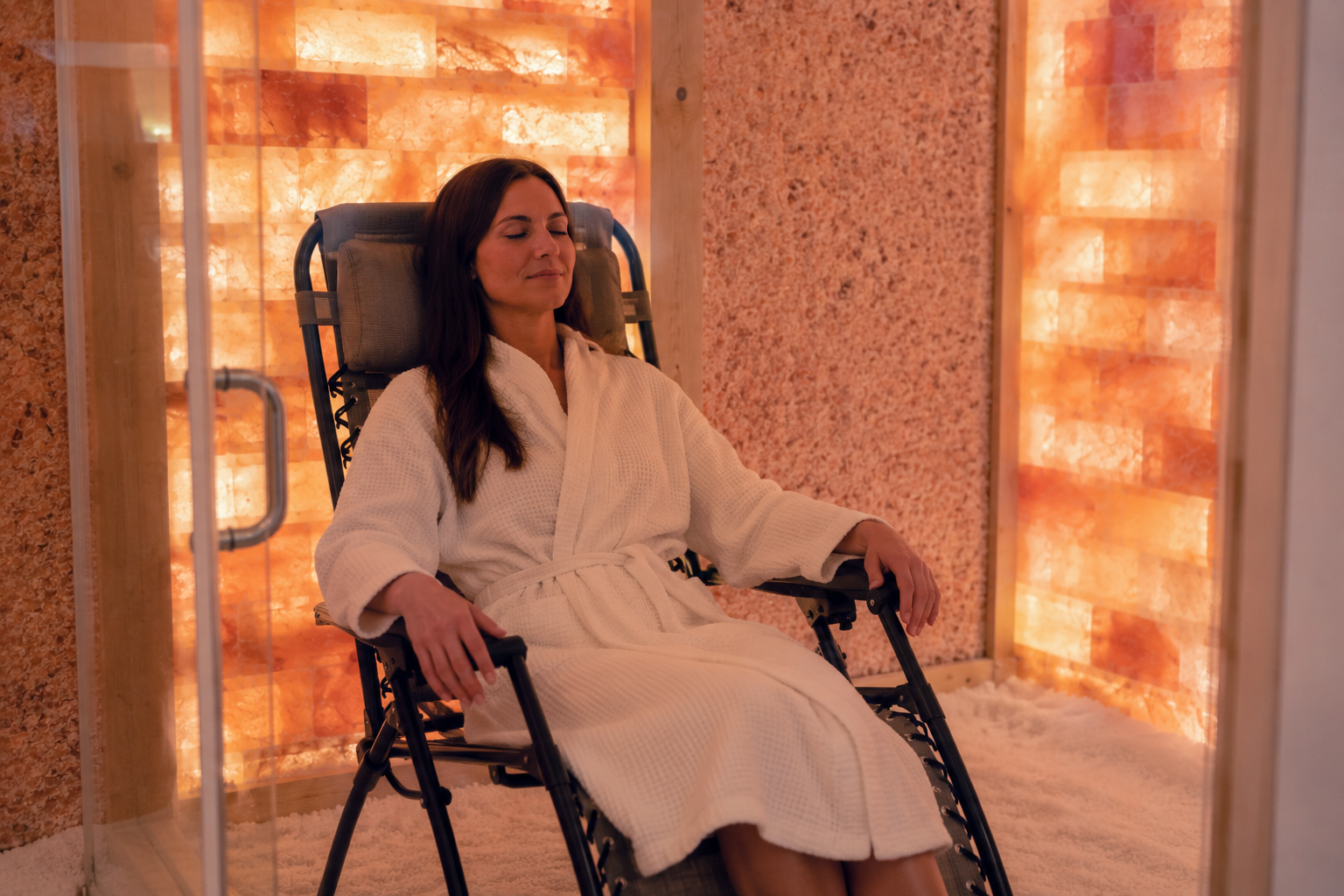
Clients sit and breathe normally for the length of the session. Because the particles are dry, they remain salt — they don't dissolve before contact with the airway lining.
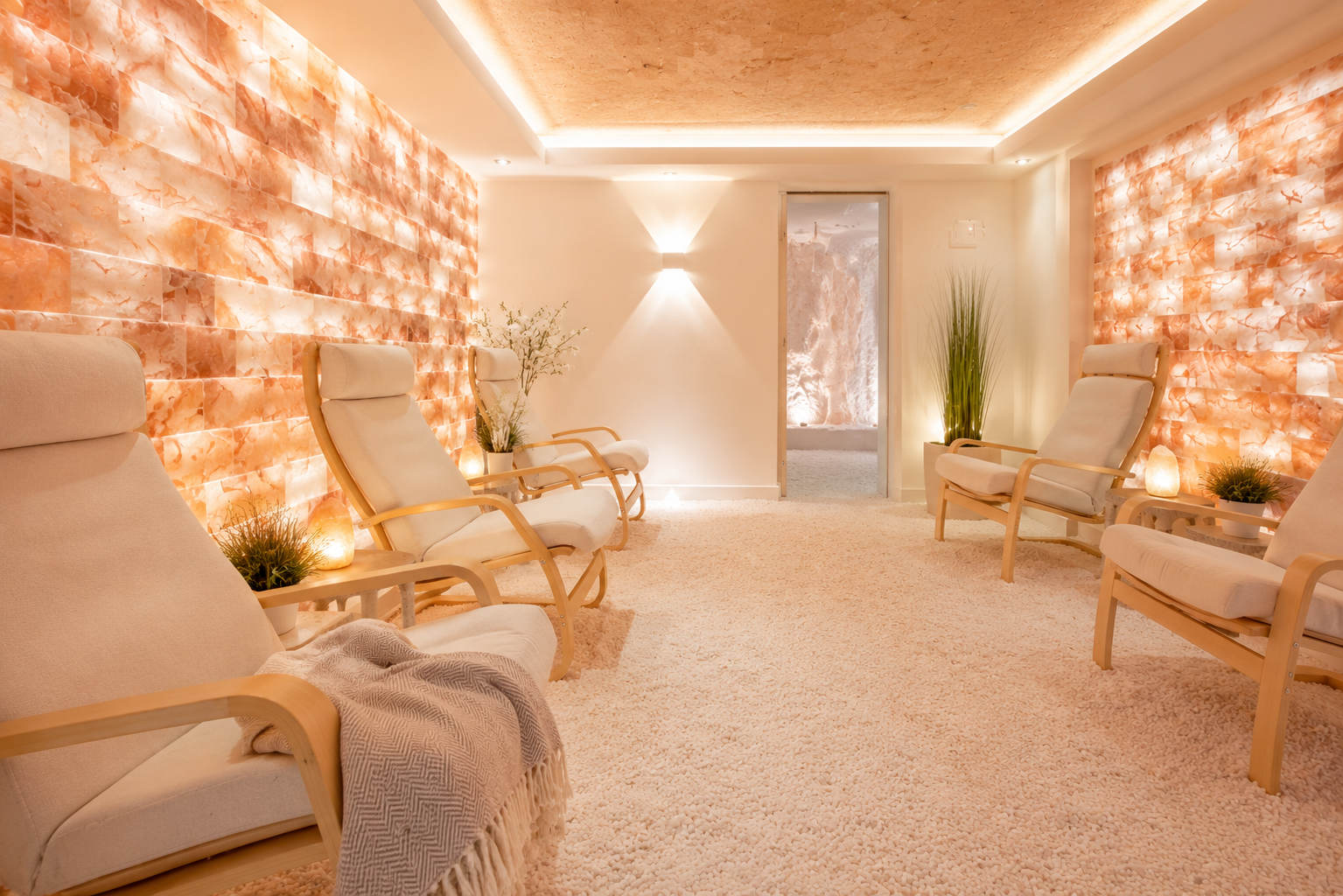
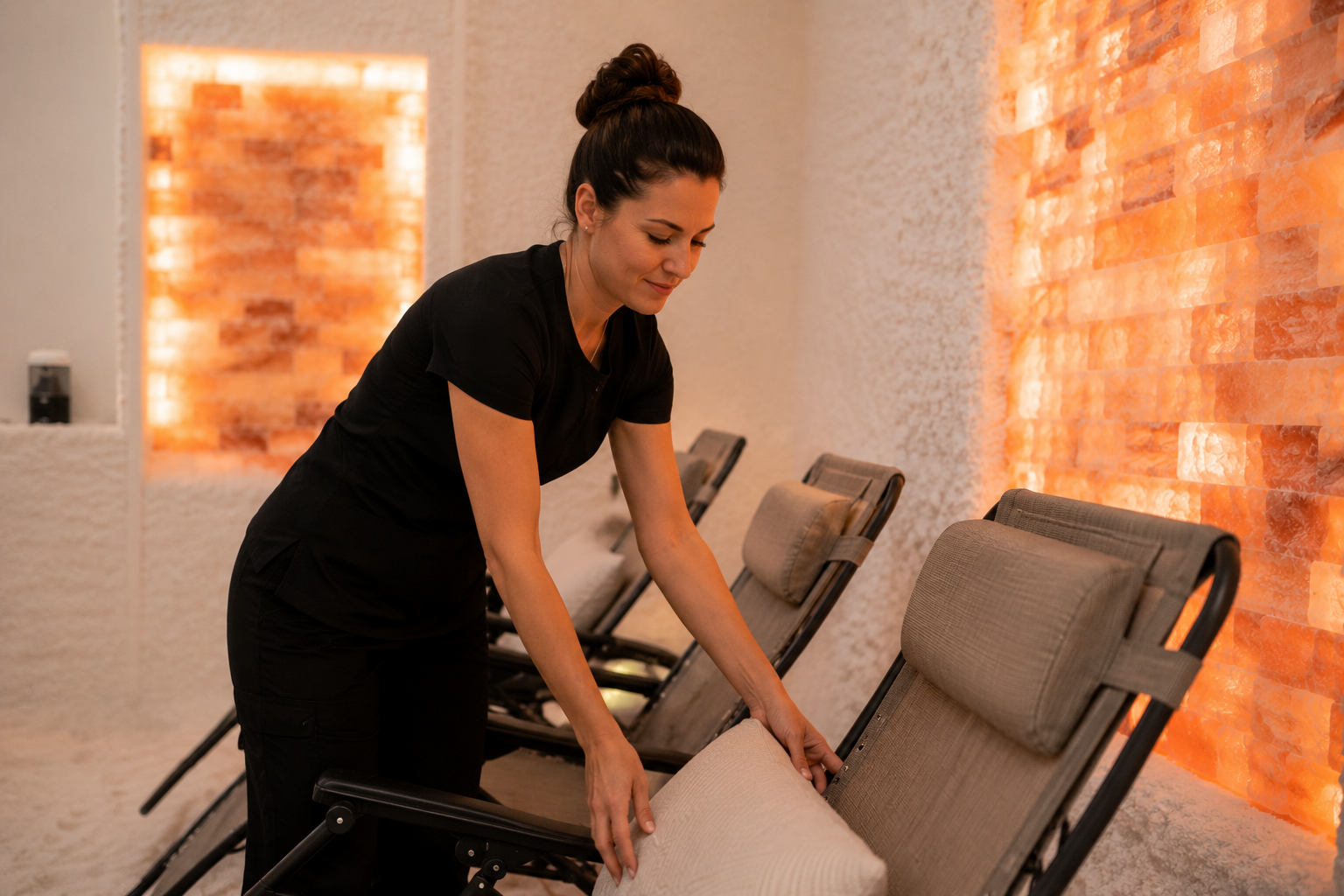
Salt walls, salt floors, and salt decor are aesthetic and ambient. They are not the active component. The halogenerator is.

A modality built for community, family, and calm.

- Halotherapy— Dry salt aerosol, inhaled in a controlled room
- Halogenerator— The device that micronizes pharmaceutical-grade salt
- Respiratory wellness— The most-studied application of salt therapy
- Skin— Salt's antimicrobial and anti-inflammatory properties
- Relaxation— Low light, quiet, controlled humidity
- Salt rooms— Walk-in environments built around the halogenerator
- Salt booths— Single-person sessions, shorter and more accessible
- Family wellness— Gentle enough for children, calming for adults
- Operator standards— STA guidance for responsible communication
- Research— A growing clinical and consumer literature
- Halotherapy— Dry salt aerosol, inhaled in a controlled room
- Halogenerator— The device that micronizes pharmaceutical-grade salt
- Respiratory wellness— The most-studied application of salt therapy
- Skin— Salt's antimicrobial and anti-inflammatory properties
- Relaxation— Low light, quiet, controlled humidity
- Salt rooms— Walk-in environments built around the halogenerator
- Salt booths— Single-person sessions, shorter and more accessible
- Family wellness— Gentle enough for children, calming for adults
- Operator standards— STA guidance for responsible communication
- Research— A growing clinical and consumer literature
What the research and client reports suggest.
The literature is growing. STA member access includes the full clinical and consumer research library; what follows is the publicly-discussable summary.
Respiratory wellness
The most-studied application. Micronized salt particles travel through the airways. Reported benefits include support for seasonal congestion, exercise-induced symptoms, and general respiratory comfort.
Skin
Salt's antimicrobial and anti-inflammatory properties have been studied in the context of common skin concerns. Many studios offer halotherapy alongside other skin-focused modalities.
Relaxation and stress
The room itself — low light, quiet, controlled humidity, and salt-walled — produces a measurable reduction in self-reported stress in client surveys studios have shared with the STA.
Adjunct, not replacement
STA's position: halotherapy is a wellness modality that complements, not replaces, medical care. Operators should not make disease-treatment claims. The STA publishes guidance on responsible communication.
What to expect at a salt therapy studio.
- 01
You'll be greeted and asked to leave shoes outside the room.
Salt rooms are kept clean and dry. Phones are usually permitted on silent.
- 02
Sessions run 30 to 45 minutes, sometimes longer for adult-only deep sessions.
Wear comfortable clothes. Many studios provide white socks or shoe covers.
- 03
The halogenerator runs for the duration of the session.
You may see a fine salt residue on your clothes after — this is normal.
- 04
Hydrate after.
Many people report a clearer feeling after sessions; effects vary by person and frequency of visits.